domingo, 30 de septiembre de 2018

First rebel group begins withdrawal from demilitarised zone in Syria’s Idlib | The Indian Express

First rebel group begins withdrawal from demilitarised zone in Syria’s Idlib | The Indian Express

First rebel group begins withdrawal from demilitarised zone in Syria’s Idlib

Turkey and Russia had agreed in mid-September to enforce a new demilitarized zone in Idlib province from which rebels will be required to withdraw by the middle of next month.

Written by Reuters | Beirut | Published: September 30, 2018 2:29:22 pm
First rebel group begins withdrawal from demilitarised zone in Syria's Idlib
The demilitarized zone will be 15 to 20 km (10 to 12 miles) deep, run along the contact line between rebel and government fighters, and will be patrolled by Turkish and Russian forces.

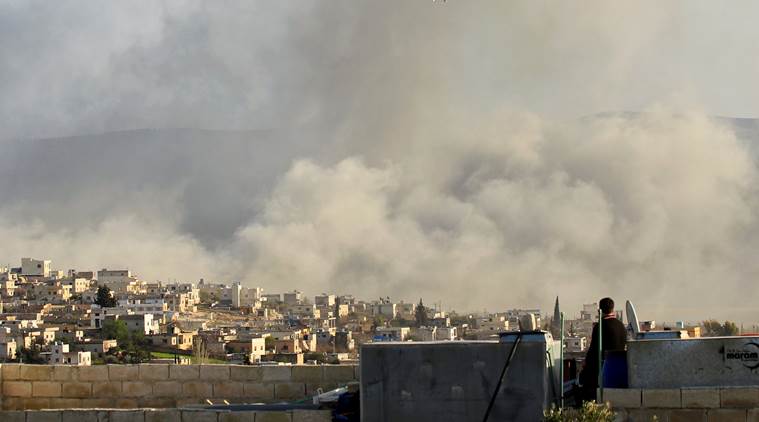
The Syrian Observatory for Human Rights said on Sunday that rebel group Failaq al-Sham has started withdrawing its forces and heavy arms from a demilitarised zone in northwest Syria. The group is the first to comply with a requirement to leave a demilitarised buffer zone set up by Turkey and Russia to avert a Russian-backed Syrian army offensive, Rami Abdulrahman, head of the UK-based war monitor told Reuters.
Rebel sources could not immediately be reached for comment. “The group is withdrawing its forces and heavy arms in small batches from southern Aleppo countryside, adjacent to Idlib province, which is part of the DMZ towards the west,” Abdulrahman said.
1m 36s
Turkey and Russia agree on a demilitarised zone in Syria's Idlib
The leaders of Turkey and Russia have agreed to create a demilitarised zone around Syria's opposition and rebel-held province of Idlib that will come into effect by October 15.
The demilitarized zone will be 15 to 20 km (10 to 12 miles) deep, run along the contact line between rebel and government fighters, and will be patrolled by Turkish and Russian forces.
Turkey and Russia had agreed in mid-September to enforce a new demilitarized zone in Idlib province from which rebels will be required to withdraw by the middle of next month.
Failaq al-Sham is the third largest group among the rebel groups in Northwest Syria, according to the monitor.
The biggest jihadist group, Tahrir al-Sham, has yet to announce its position regarding the agreement.

Gained in translation: In search of Karuna | The Indian Express

Gained in translation: In search of Karuna | The Indian Express


Gained in translation: In search of Karuna

Excerpts from Kondapalli Koteswaramma’s speech on her birth centenary celebrations at Visakhapatnam on August 5.

Updated: September 30, 2018 10:43:20 am
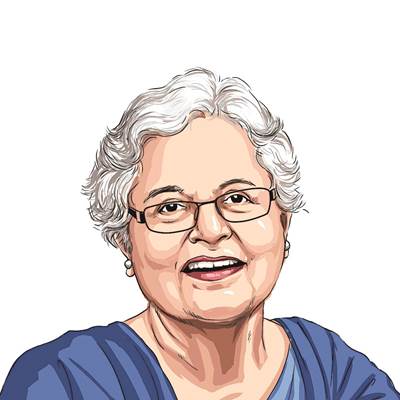
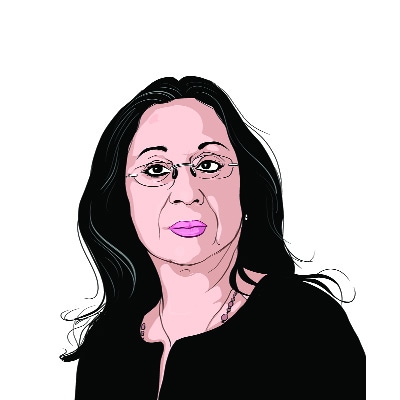
Illustration: C R Sasikumar

Written by: Kondapalli Koteswaramma
Translated from Telugu by Gita Ramaswamy
Namaskaramu to all of you here. I have lost everyone — children, husband, property, everything — but when I see so many of you good people here, loving me, I feel I am a good woman.
There is a reason for my surviving so long. When my children died and I was weeping, Neelam Rajasekhar Reddy came to me and said, “Amma, don’t weep, Karuna (my daughter) is not dead. Karuna is alive. Karuna is there in your eyes. Karuna came to me and said, ‘Brother, console her’. That is why I have come to console you. It is Karuna who will help you grow (sustain).” Karuna has not died, he said. This Karuna should live. There is Karuna in our tears. There is Karuna in my tears and in yours. You should live to keep that Karuna alive, he said.
Where is that Karuna? In the world where there is no hierarchy, where there is no heroism, where there is no subordination or hegemony — whether in parties or among individuals — where there is no upper caste or lower caste, Karuna is there in that socialist society. What should we do to construct that socialist society? We should work for this. It was this thinking, this inspiration that kept me alive for so many years.
Later, Chandra Rajeswara Rao said, “Amma, write.” I began writing my thoughts. As I wrote, I lived my life without asking anyone anything. So Rajeswara Rao said, “Words are your food. You should live like a Communist.”
When the Communist party split, I felt very sad and wept: Ayyo, such good people, they have split. What will happen now? From two parties, the split has grown to 10 parties. Who will construct a socialist society? There are people who also heckle us if one is friendly with any one group and call us names like opportunist.
The people who struggled then are also there now, watching. The country has changed, it is no longer what it was in those days. Anarchy has grown, young girls are not safe… the Communists beat up rowdies earlier and ensured that they fled. When I recall the great people who worked earlier, I wonder and agonise who will work for the country. But I am an optimist. I am confident that such people will again come up from the youth. That goodness will return… It is with this optimism — the inspiration that was given to me by great people like (Puchalapalli) Sundaraiah, Rajeswara Rao, Rajasekhar Reddy and the love given to me by people — that I survived all these years.
Rajasekhar Reddy told me to sustain that Karuna. I could not do that. I should do it at least in words, so I wrote my memoirs. I wrote Amma Cheppina Kathalu (The Stories Amma Narrated) to show how children should be raised. Shivasagar (K G Satyamurthy) came to me and said, “I will wipe your tears with mine.” Isn’t all of life sorrow? We cannot wipe away all our tears, this is the story of women through so many generations… The people who published my writings saw mercy and compassion in them. Otherwise they would not have published them. I have not published even one of my writings, others have taken it up…
When I observe all this, I know for certain that Karuna is still alive. We should make this Karuna big, we should sustain her. My Karuna died, but Karuna is still alive in the country and among people. It is when a socialist society is built that Karuna will stand tall. I have hope that this will take place.
Sometimes, I lose hope — what is happening? Because I am an optimist, I tell myself, don’t lose hope, the goal may be far away, but youth will come to bridge that distance. I have hope that youth will come — to build a socialist society, sustain Karuna. I died a long time ago. I was reborn when I got these thoughts, that day was my birthday. I lived with this hope all these days. Sundaraiah told me, “Don’t harm the country, do only good.” You should not die, he said. I carried this out through my writing.
Nothing remained for me in life, only the name Kondapalli. This is because my son (Chandu) told me that you should remain Kondapalli Koteswaramma, you should be Kondapalli Chandu’s mother. He died for the country. I survived as Chandu’s mother. I don’t tell you to sacrifice your lives as Chandu did, but I ask you to think of the socialist reconstruction, concern yourselves with the prevailing anarchy, nobody should think in terms of hegemony or subordination, this party or that. I assure you that day will come.
Excerpts from Koteswaramma’s speech on her birth centenary celebrations at Visakhapatnam on August 5. Wife of Kondapalli Sitaramayya, founder of People’s War Group, Koteswaramma participated in the Telangana Movement as a member of the undivided CPI and later was associated with various reform and feminist movements in Andhra Pradesh. Her autobiography, Nirjana Vaaradhi (The Sharp Knife of Memory), written at the age of 92, has been translated into various languages. She died on September 19 at the age of 100. 
Translated from Telugu by Gita Ramaswamy
Inside track: The Nehru Memorial Museum fight | The Indian Express

Inside track: The Nehru Memorial Museum fight | The Indian Express

Inside track: The Nehru Memorial Museum fight


Inside track: The Nehru Memorial Museum fight

NMML Director Shakti Sinha wants to convert the Teen Murti complex into a museum for all former prime ministers, not simply Pandit Jawaharlal Nehru.

Written by Coomi Kapoor | Updated: September 30, 2018 1:13:50 am
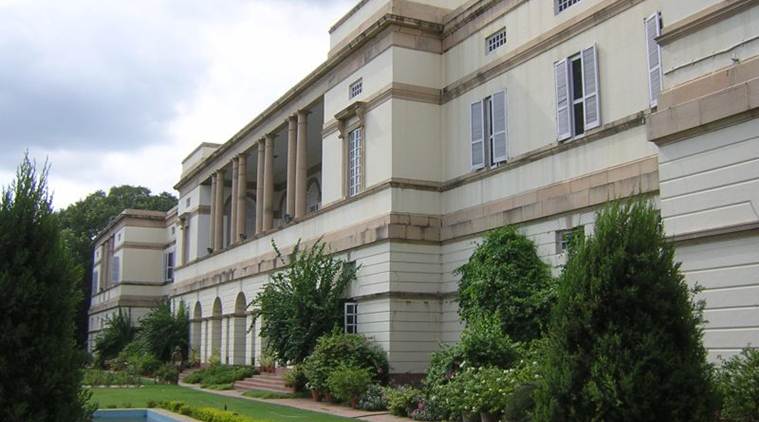
Nehru Memorial Museum and Library

The tussle between the legatees of the Gandhi family and the present government over the future of the Nehru Memorial Museum and Library (NMML) has heated up. NMML Director Shakti Sinha wants to convert the Teen Murti complex into a museum for all former prime ministers, not simply Pandit Jawaharlal Nehru. Two months ago, at a stormy annual meeting of the NMML Executive Council, Rajnath Singh, as vice-chairperson, assured Karan Singh that no plan for a new concept of the museum would be implemented without consensus. But this month, a notice was served by the Housing and Urban Affairs Ministry to evict the Jawaharlal Nehru Memorial Fund from the Teen Murti estate. Meanwhile, Sinha has questioned the demand of the Indira Gandhi Memorial Trust (IGMT), headed by Sonia Gandhi, to return all documents of the late prime minister which are housed in the museum. For the last two years, the director has refused to hand over the papers on the grounds that once documents are transferred to a library for the avowed purpose of access to scholars, they cannot be withdrawn. The IGMT, however, says the library was simply “the custodian’’ of the papers and the ownership rights remain with Indira Gandhi’s family, as per her will. Before Narendra Modi came to power, researchers were allowed to examine the Nehru and Indira papers only with the express permission of Sonia. She has a valid legal point since the collection consists of Indira’s private papers and only copies of official documents, not originals. The issue could well end up in court.
Stars and politics
Rasheed Kidwai’s latest book, Neta Abhineta, is filled with juicy anecdotes about the close ties between Bollywood stars and the political world. For instance, he writes, Prithviraj Kapoor, the founder of the Kapoor dynasty, once ticked off RSS chief M S Golwalkar at the Khandala railway station between Bombay and Poona. Kapoor entered Golwalkar’s compartment and chided him for not controlling his noisy supporters, explaining that in politics discipline was necessary. Kidwai points out that there was a close connection between the Gandhis and Kapoors, both leading families in their respective fields. In fact, there was speculation that there could be a matrimonial alliance between the two powerful clans, he says. Indira Gandhi was reportedly keen on a match between Raj Kapoor’s elder daughter Ritu and Rajiv, before Sonia entered the picture. Years later, according to Kidwai, Rahul seeking first-day-first-show tickets for Kareena Kapoor’s films set off fresh rumours. Rahul’s curiosity was reportedly triggered after the actress in an interview with Simi Garewal remarked that she would consider him a dream date. Kareena retracted later after developing other love interests, but the warm relations between the two families over generations have endured. In contrast, the Bachchans and the Gandhi were much closer, but the relationship had sharp ups and downs.
Silence on Rafale
It was noticeable that when Rahul Gandhi raised a hue and cry over former French president Francois Hollande’s claim that the offset agency in the Rafale deal was chosen by the Modi government, none of the other anti-BJP parties joined the chorus. Mamata Banerjee, Mayawati, K Chandrashekar Rao et al do not want to give Rahul any opportunity to be viewed as the main player in a possible Opposition alliance. They see 2019 as their last opportunity to fulfil their prime ministerial ambitions.
Shah’s third front
Amit Shah is working hard to form a third front to divide Opposition unity. His task has been made easier since Opposition leaders are now talking of state-level alliances rather than a national mahagathbandhan. Shivpal Singh Yadav is the most prominent spoiler so far, but others are expected to join the pack. In Gujarat, Shankersinh Vaghela will either float his own party or join the NCP. Mayawati’s position will become clearer as the 2019 election approaches near. Recently, she dealt a blow to the Congress in Chhattisgarh, aligning with Ajit Jogi, and it appears that she will fight Madhya Pradesh on her own too, despite Kamal Nath’s efforts to woo her.
RSS’s glasnost
RSS chief Mohan Bhagwat displayed a greater degree of glasnost than PM Modi at his recent lecture series at Vigyan Bhavan. Modi is unwilling to hold a press conference and only provides written responses to journalists’ written questions. Bhagwat, however, agreed to take questions live from the editors present, though his method was slightly convoluted. The media queries were all put in a box. The Sangh workers clubbed them subject wise and the Sarsanghachalak then answered them.
For all the latest Opinion News, download Indian Express App
More From Coomi Kapoor
  • Inside Track: Sangh song
    Yet another explanation is that Bhagwat is simply keen to establish that the RSS has evolved and should not be penalised by future non-BJP governments.…
  • Inside Track: Party before govt?
    There are enough straws in the wind to indicate that former BJP president and Union minister Nitin Gadkari is feeling the chill even though, officially,…
  • Inside Track: Vanishing line
    The BJP high command and the PMO have been pressing the chief ministers of BJP- ruled states to furnish statistics of the beneficiaries of different…

Out of my mind: Rafale Recipe | The Indian Express

Out of my mind: Rafale Recipe | The Indian Express

Out of my mind: Rafale Recipe


Out of my mind: Rafale Recipe

HAL has never produced a fully domestically produced fighter plane. This was why India had MIGs prone to crashing.

Written by Meghnad Desai | Published: September 30, 2018 12:09:25 am
Full statement by Dassault Aviation after former French president Francois Hollande's disclosure
Whatever the politics of the matter, India cannot keep its defence forces at the mercy of fractious, dysfunctional parliamentary politics.  (File)

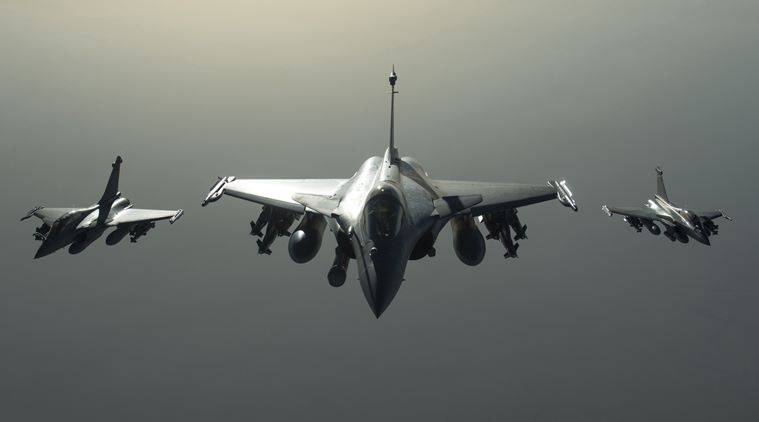
The most important thing about the Rafale issue is that, whatever happens in the political sphere, the Air Force should urgently get its squadron of fighter planes. The rest is political moonshine. The fear of suspected corruption in the purchase of arms from foreign suppliers has haunted Indian politics since Independence. It began with V K Krishna Menon and the Jeep scandal. At the height of hostilities with China, the Congress was so fearful of buying equipment from abroad that Menon, then the defence minister, insisted on locally produced weapons. But despite the ambitious Second Five Year Plan, India had no capacity to produce efficient weaponry. Even now it does not have. HAL has never produced a fully domestically produced fighter plane. This was why India had MIGs prone to crashing.
Rajiv Gandhi was badly burnt when he tried to change the rules and bought abroad. Whatever the fighting quality of the Bofors gun, it destroyed his majority. The entire conduct of the issue was a disgrace for the Indian political elite. Had the Army had its way, they may have asserted the usefulness of some good modern equipment. There was the coffin scandal that blighted the career of that marvellous socialist George Fernandes. It would be difficult to recall now what it was all about, if anything.
The memory of these scandals froze A K Antony during the 10 years of the UPA government, and the defence forces were left badly under-equipped. The original Rafale deal was never consummated. Here are we again and no one is concerned about the Air Force and its needs. It is revenge time for Bofors.
Whatever the politics of the matter, India cannot keep its defence forces at the mercy of fractious, dysfunctional parliamentary politics. Defence purchases ought to be hived off, in a separate, expert, constitutionally established body, which should be in charge. It should lay down a multi-year strategy spanning more than one parliament. It will of course need to have membership of the ruling party/coalition, but should also include the most recent defence minister and prime minister no longer holding those offices. It should have substantial representation of the defence forces but also prominent retired defence personnel. The committee can decide how much of its procedure and working to make public. The issue is serious defence planning and not parliamentary point-scoring.
There is of course the present dispute. Looking at it from the outside, it does not reflect well on the quality of political debate. Elections are near and much is at stake. No wonder Reason has fled the scene. Allegations and counter-allegations are flying around, but with no clarity or hope of settlement. The best way to settle the issue would be to appoint a single-person inquiry, which will not submit a report before the electorate has decided who will be the next government of the country.
If it is truth that both sides want, rather than short-term political advantage, this is the best strategy. The person who can do this has to be someone with experience of decision-making in government but trustworthy as being above party politics. Publishing the decision after the Election takes politics out of defence.
My person of choice to do this is Pranab Mukherjee. Give him the task.
For all the latest Opinion News, download Indian Express App
More From Meghnad Desai
Meghnad Desai
  • Modi’s future?
    Narendra Modi's life in four parts of 17 years each, and the prospects of BJP/NDA in 2019...
  • Out of my mind: A simple lesson
    Factional splits are the norm rather than exceptions in Indian politics. This is not because there are deep ideological differences among the parties. The trouble…
  • Out of my Mind: A grave danger
    While the Supreme Court came through with flying colours with its verdict on Section 377, it did something in the week before which has hardly…

Rajasthani reality | The Indian Express

Rajasthani reality | The Indian Express

Fifth Column: Rajasthani reality


Rajasthani reality

Bad policies for decades give urban Indians hefty subsidies on water supplied to their homes while rural Indians buy it at exorbitant rates from tankers, or drink water the colour of mud from village ponds.

Written by Tavleen Singh | Updated: September 30, 2018 1:05:39 pm
drought, farmer suicide, suicide, maharashtra drought, drought, marathwada drought, marathwada farmers, marathwada farmer suicide, ncrb,no rain, no modern technology, marginal farmers, indian express news, indian express explained
Why has this situation been allowed to exist for so long? Why have we not learned from countries like Israel how to find water in states that are as arid as Rajasthan? (Representational Image)

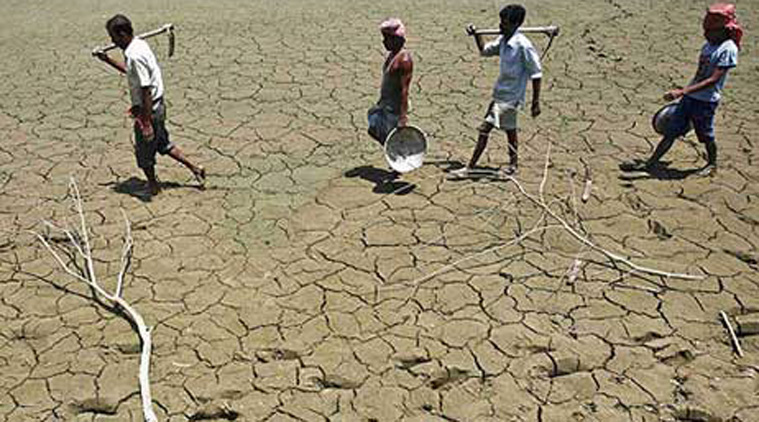
Whenever I feel bogged down by the supposedly big issues that Indians who live in big cities become momentarily obsessed by, I travel into rural India for a reality check. I did this last week in villages that lie deep among the sand dunes of western Rajasthan and found that nobody I met mentioned Rafale or the Ram Mandir. The drought in these parts is so severe this year that what obsesses people here is how they are going to find water. The situation is desperate because the rains failed completely.
Last time I wrote about a similar reality check, I was put through a full inquisition by BJP denizens of Delhi’s drawing rooms and high officials in the Prime Minister’s office. So this time, before going any further, I shall name the villages I visited. I went to Tolesar, Navatala, Jawaharpura and Jasoron ki Beri in the district of Barmer, and Teliwada, Ranjitpura and Chainpura in the district of Jaisalmer. On the way to these villages I drove past fields and fields of ravaged crops. The bajra (millet) crop that is yellowing in the thirsty, khaki land is now fit only for fodder. Sadly, water sources in these villages are drying up so rapidly that animals could start dying in weeks. What makes people more despondent than usual is that they know that once the election campaign begins for the Rajasthan Assembly, nobody will be interested in their plight.
The criminal neglect that has created a situation in which the poorest, rural Indians pay more for water than privileged city Indians is not new. Bad policies for decades give urban Indians hefty subsidies on water supplied to their homes while rural Indians buy it at exorbitant rates from tankers, or drink water the colour of mud from village ponds.
Why has this situation been allowed to exist for so long? Why have we not learned from countries like Israel how to find water in states that are as arid as Rajasthan? I do not know.
What else did I discover on this reality tour? I found that Narendra Modi’s efforts to drag rural India, kicking and screaming, into the digital age are not working that well on the ground. Subsidies that were easily accessed from accounts in village post offices are now being transferred directly to bank accounts so far from where the beneficiaries live that they waste a day travelling by the only bus to a bank that can be as far as 50 kilometres away. Once there, they often find that they cannot get inside because thousands of people are waiting their turn. So to collect their meagre subsidies from the MNREGA and other grandiose government welfare schemes, they can end up spending nearly half on travel. This is without counting the loss of their daily wages. More rural banks was the demand in every village I visited.
In every village I also met young men impatient for jobs. Farming and animal husbandry were the pillars of the economy and because of the depredations of cow vigilantes, this second pillar has begun to crumble. In Muslim villages I was told that they were giving up cattle farming because they were unable to transport animals from one market to another without being waylaid by vigilantes. Another grim consequence is that the menace of stray cattle is now so huge that those who can afford to, like the Jat farmers in Jasoron ki Beri, put up wire fencing around their fields.
Does this grim picture indicate that Narendra Modi has become hugely unpopular? No. He continues to retain a surprising measure of popularity because he is seen as a man of integrity who in the words of many I spoke to “is trying to repair the damage done by 70 years of bad policies”.
The faith in Modi is so great that many believe that even Mukesh Ambani’s Jio revolution (and it is a revolution) has happened because of him. Deep in villages buried behind sand dunes, 4G is available to those who subscribe to Jio. This also means that people have a greater knowledge about the issues of the day than they did before because more and more rural people now have access to data.
Another reason for Modi’s popularity remaining relatively intact is because in this part of rural India Rahul Gandhi continues to be seen as a sort of ‘clown prince’. In the two Muslim villages I visited, there was more acceptance of him but even here I found that people smiled when I asked if they would choose Rahul over Modi if that choice was put before them. To tell you the truth, the desperation for water is so great that I was a little ashamed to ask too many questions about political leaders. There is a water emergency that needs urgent solutions today.
Follow Tavleen Singh on Twitter @ tavleen_singh
For all the latest Opinion News, download Indian Express App
More From Tavleen Singh
Tavleen Singh
  • Can the RSS change?
    The ugly truth is that the colonisation of India has continued with greater success after the British left, mostly because they left behind a colonised…
  • Fifth column: In defence of Mallya
    Instead of competing to distance themselves from big business our political leaders should explain to the people of India why a company that produced 40…
  • The first lynching
    Three years after the murder of Mohammad Akhlaq, there is no remorse in his village. There is a sense of menace...