LOS MARGINADOS: un sentimiento que cunde entre la población mundial que va quedando despreciada por el poder político y la avaricia y la angurria de los grupos de poder cuyo único interés es sacrificar al prójimo.
Se hace necesario rodear y apoyar a nuestras autoridades en la noble y difícil tarea de gobernar un país tan dividido, diverso y polarizado como el que hoy tenemos.
Medellín
La verdad es que a pesar de todas las expectativas y las muy buenas intenciones, que con seguridad han rodeado este gobierno, no ha sido posible que se cumpla con las promesas de cambio y de transformación que han sido expuestas en la campaña por el entonces candidato Duque y que fueron la bandera fundamental en el proceso eleccionario, para que las mayorías salieran a votar por dichas iniciativas, pensando en que en realidad, con su juventud y liderazgo, se iban a introducir unas estrategias gubernativas que no sólo retomarían el –para ellos, equivocado rumbo que llevaba la Nación, hacia un mejor puerto, sino que también fundamentaron su programa en la necesidad de acabar con los enfrentamientos y los enconados odios políticos que han originado gran parte de los fracasos y desaciertos que se han tenido en materia administrativa y política de Paz en los últimos tiempos.
Algunas de las más llamativas propuestas, por las que votaron las mayorías ciudadanas y con las cuales persuadieron hasta los más desprevenidos electores, versaron sobre temas que hasta ahora no se han podido cumplir o se ha hecho frente a estos tópicos totalmente lo contrario a lo prometido, generando, por supuesto, desconcierto y estupor entre quienes conocieron y apoyaron el programa de gobierno que condujo al éxito al joven presidente.
Que no habría reforma tributaria, fue la consigna, y ello, a pesar del gran debate nacional que en su contra se originara, inclusive, hasta por importantes sectores sociales y económicos cercanos a la Casa de Nariño, es ahora toda una realidad. La promesa fue incumplida ante la mirada de asombro y tristeza de quienes con razón alegaban que dicha reforma no iría, pues ello había sido una reconocida propuesta de campaña.
Que la lucha contra la corrupción y las malas prácticas gubernativas sería su mayor desvelo y así lo prometió solemnemente en abierta y pública alocución presidencial. Este tema adquirió especial connotación porque así lo dispuso el pueblo en un histórico y clamoroso llamado popular, pues a través de la consulta realizada para esos efectos, el pueblo de manera contundente y clara dijo que era imperiosa esa lucha, no sólo para el entonces naciente gobierno, sino para toda la institucionalidad y la Sociedad misma, que se han visto envueltos y agobiados por los más altos índices que la historia haya arrojado en materia de corrupción, obligados a emprender una frontal lucha contra tan delicado y delincuencial fenómeno. Pero todo ello ha pasado a la historia, la consulta se perdió no solo porque a ella se opusieron importantísimos sectores políticos y de opinión comprometidos con el gobierno. Lo que de plano fue totalmente adverso y extraño, porque quienes eran los más llamados a defender la consulta por ser afines al gobierno, no dejaron de ocultar un cierto aire de desprecio y desazón por la propuesta de saneamiento político y social que se cocía en inmensos sectores de opinión de ciudanía que cansados, ante tanta corrupción, querían y solicitaban clamorosamente apoyo para esos importantes propósitos.
Hoy de la aludida Consulta Popular poco queda, infortunadamente resultó ser una burla más para el pueblo que apenas empieza a enterarse que a pesar de su copiosa votación y de las múltiples promesas gubernativas de hacerla una realidad, una a una, esas propuestas se fueron disipando en el escenario de un Congreso dividido por los odios, los enfrentamientos ideológicos y el desencanto con un gobierno que -a decir verdad- poco hiciera por defender esas leyes en medio de tímidas e inclusive arrogantes posiciones, que la fueron debilitando, hasta que se hundiera definitivamente. Con ello se perdió la gran oportunidad de establecer fuertes y eficaces instrumentos que permitieran efectivamente el acometimiento de la lucha prometida por propios y extraños, con políticas y medidas realmente eficaces y conducentes a resquebrajar y exterminar de una vez y por siempre a éste tremendo monstro de múltiples cabezas que nos está carcomiendo a todos con una creciente fuerza y poder realmente descomunales y sin que nada ni nadie pueda hacerle frente a tan ingenioso y maligno accionar. Si la atención y defensa del gobierno a esta reforma hubiese sido siquiera igual a la que desplegara, para no dejar hundir la reforma tributaria, otro muy distinto hubiese sido el resultado, pero infortunadamente ello no aconteció y los resultados nefastos, obviamente, no se dejaron esperar. Es que no podría ser de otra manera, se requería pasar del dicho al hecho, del discurso a la acción. Por ello estamos como estamos, ante una creciente e imparable corrupción que no tiene límites, ni pudor y que actúa sin control alguno, de la manera más libre, abusiva e impune.
De las demás propuestas vale la pena resaltar algunas otras, como la de la reforma a la Justicia que tampoco pudo sostenerse por mucho tiempo en su lánguido tránsito por el legislativo, pasando a recibir finalmente, como se dice en el argot popular, un entierro de tercera. La reforma política, siendo tal vez la mejor librada, hay que decir que también ha sido cercenada en casi todos los temas de mayor relevancia, si algo logra salir es apenas lógico que sea poco lo que pueda avanzar en la solución de los grandes males, dificultades y obstáculos que se quisieron eliminar y que fueron el motivo de su presentación e impulso.
Ahora bien, del engorroso tema pensional, que también es motivo de mucha preocupación social y que crea profunda ansiedad en un gran número de trabajadores que aspiran a lograr terminar bien su vida laboral y de muchos otros que ya gozan de ese beneficio y que pudieran resultar afectados con el trámite de esa importante reforma, lo que se sabe últimamente, por influyentes voces del palacio presidencial, contrario a lo ya se había afirmado por el ministro de las finanzas, es que no se presentará este año, se pospondrá para otra vigencia, tal vez como estrategia para no afectar, con este engorroso y neurálgico tema, al proceso electoral que se avecina.
Ni que decir del espinoso y difícil tema de la Seguridad, donde los desaciertos no se han dejado esperar, dejando en calzas prietas uno de los pilares más granados y básicos de la actual política gubernamental, bastaría revisar en esa materia, los grandes y fatales problemas que tienen hoy inmenso número de líderes y procesos sociales, y las grandes ciudades, que están también asediadas por complejos e imparables inconvenientes de orden público, a los que no se les ha podido otorgar los tratamientos adecuados. Son pues, todas éstas, grandes dificultades por las que atraviesa el país, que deben revisarse, para que en lo posible, por el bien de todos, se haga lo que ha solicitado ya el ex mandatario más afín y cercano al nuevo régimen, “hay que enderezar…” so pena de que las cosas empeoren.
Hay que reencausar, encaminar, encarrilar, consensuar y, si es necesario corregir, Colombia lo necesita. Para ello se hace necesario rodear y apoyar a nuestras autoridades en la noble y difícil tarea de gobernar un país tan dividido, diverso y polarizado como el que hoy tenemos.
Here is where American voters stand on immigration
Last week, President Donald J. Trump made an appeal for bipartisanship to solve America’s immigration crisis. The reason is simple: Ordinary Americans across the political spectrum want to see illegal immigration addressed. The people fighting hardest to preserve the horrible status quo are entrenched interests in Washington.
This time must be different. President Trump has given Congress 3 weeks to reach a deal that secures our border while protecting the most vulnerable communities. Public opinion polls back the President up:
A recent ABC/Washington Post poll shows that most Americans believe the Government is doing “too little” to stop illegal immigration—including 4 in 5 Republicans, more than a third of Democrats, and a majority of independents.
Echoing that theme, a Gallup poll last month revealed that Americans view immigration as the second-biggest problem facing the country today.
A 2018 POLITICO/Morning Consult pollconfirms a majority of voters disagree with Democrats’ proposal to eliminate U.S. Immigration and Customs Enforcement entirely. Not even a majority of Democratic voters agree.
Gallup polls from 2018 show that a majority of Americans personally worry about illegal immigration a “great deal” or a “fair amount.” More Americans oppose than support “sanctuary cities” that skirt Federal immigration laws, as well.
If Americans of all stripes call for safe and secure borders as part of common-sense immigration reform, why not give law enforcement the tools they need to do their jobs safely and effectively? That shouldn’t be controversial. Congress needs to put the concerns of American voters before those of special and political interests.
There is some good news, however: A growing number of Democrats understand that obstructing immigration reform would put them at odds with ordinary Americans. In recent weeks, they’ve broken rank with Democratic leaders such as House Speaker Nancy Pelosi (D-CA) and have backed border security.
“Certainly you need barriers, and we support barriers,” Sen. Ben Cardin (D-MD) explains. Ditto Sen. Mark Warner (D-VA): “Where folks say we need additional barrier protections, I’m all for it.”
Democrats who put sensible solutions above obstructionist politics should be applauded. Those who don’t need to listen to voters—not their donors or party bosses.
President Trump calls Venezuela’s interim President
President Trump last week officially recognized Juan Guaido, President of the Venezuelan National Assembly, as the country’s Interim President.
More than 3 million people have fled Venezuela since 2015. The United Nations estimates that number may swell to more than 5.3 million by the end of 2019. The United States is standing with Venezuelans as they demand democracy, human rights, and prosperity—all things denied to them by the corrupt Maduro regime and its authoritarian predecessor, Hugo Chavez.
President Trump spoke with Interim President Guaido today, congratulating him on his historic assumption of the presidency and reaffirming American support for Venezuela’s fight to regain its democracy.
U.S. Customs and Border Protection officers listen to President Donald J. Trump give remarks during his visit near the U.S. Border Patrol McAllen Station in McAllen, Texas | January 10, 2019
Written by G Pramod Kumar |Updated: January 31, 2019 3:13:46 pm
The author is a former journalist and UNDP Senior Adviser in Asia Pacificl who is presently a writer based out of Chennai and Thiruvananthapuram.
Why Rahul Gandhi was right in his criticism of Kerala’s health sector
There are multiple studies that show a very high share of household income -- particularly among the poor -- going to medical expenditure, which also leads to catastrophic expenses.
What’s keeping most of the people of Kerala seemingly healthy are the private hospitals which come at a huge personal cost. (File Photo)
The brief references to Kerala’s health and education sectors by Congress president Rahul Gandhi in his public address on Sunday have triggered a severe backlash from the ruling CPM. Led by the health minister KK Shailaja, the party apparatus has launched a counter-attack against Rahul Gandhi alleging that he has humiliated Keralites by making wrong charges against the health and social sectors that the state prides itself in.
KK Shailaja even drew a parallel between Rahul Gandhi’s references to Prime MinisterNarendra Modi’s remarks some time back in which he reportedly said that the infant mortality among the tribal people in the state was comparable to that of Somalia. The message of Shailaja and the party cadres, which also include hundreds of cyber-proxies who troll and bully political rivals on social media besides writing longFacebook-essays on critical issues, was very simple: Rahul slighted Malayalees with his health and education remarks exactly like Modi did with his Somalia comparison.
But, did Rahul say anything wrong?
A close look at Rahul Gandhi’s speech shows that he didn’t. All he did was asking questions such as where the hospitals and schools were that everyone could access.
The minister in her retort was not specific about Rahul’s remarks, but repeated the exemplary basic health indicators of the original “Kerala Model of Development” that had long since become a human development legend across the world. She also reeled out numbers of hospitals, assistance given to people and names of some of the schemes that her government was undertaking and even claimed how people were coming from all over the world to seek medical treatment in the state. And certainly she was right in claiming the state had first rate health infrastructure. However, not even once, did she address the two most critical questions: who owns most of them and who pays for people’s health. When Rahul Gandhi rhetorically asks where the hospitals are, the message clearly is if people have universal access to healthcare.
Shailaja’s wounded pride and rebuttal, echoed by party cadres and proxies, may sound true in terms of numbers, but what it hides under the carpet is a dangerous anomaly that can rollback Kerala’s hard-earned development gains. She is right about the state’s health infrastructure, but most of it is owned by the private and corporate investors. Who pays for the health bills when people fall sick and who pays for maintaining the state’s pride of place in health – that’s the real story that Shailaja or none of the development specialists from the CPM-stable wouldn’t talk about. It’s truly a scary story.
A few critical facts would dispel the popular narrative that Shailaja repeated and would point to some merit in Rahul’s political questions: the out-of-pocket expenditure for health is the highest in Kerala (means, the financial burden of healthcare on people in the state is the highest in India), Kerala has one of the most privatised health sectors in India which according to various studies range from 65 to 90 per cent (means majority of the people go to private hospitals, and not government hospitals, for their healthcare needs), and since the 1990s, the state had recorded one of the steepest declines in public health investment (means the state is still resting on past glory). A 2014 state government report (Twelfth Five Year Plan Expert Committee Report) citing the National Health Accounts said that the share of the private sector in the state’s healthcare was as high as 90 per cent. It also said that 12 per cent of rural and 8 per cent of urban households had been pushed into poverty because of high healthcare bills.
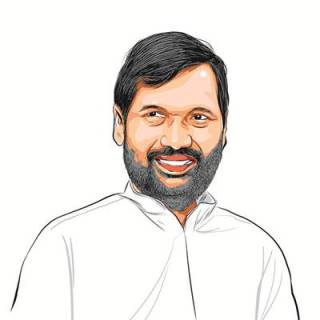
Written by Ram Vilas Paswan |Updated: January 31, 2019 12:44:29 pm
The writer is president of Lok Janshakti Party and Union Minister of Consumer Affairs, Food and Public Distribution
George Fernandes was the symbol of resistance to the Emergency
He took on the might of Indira Gandhi during Emergency and galvanised an underground resistance movement against the tyranny. At the height of terrorism in Kashmir he would fearlessly approach terrorists on behalf of the government, without security escorts.
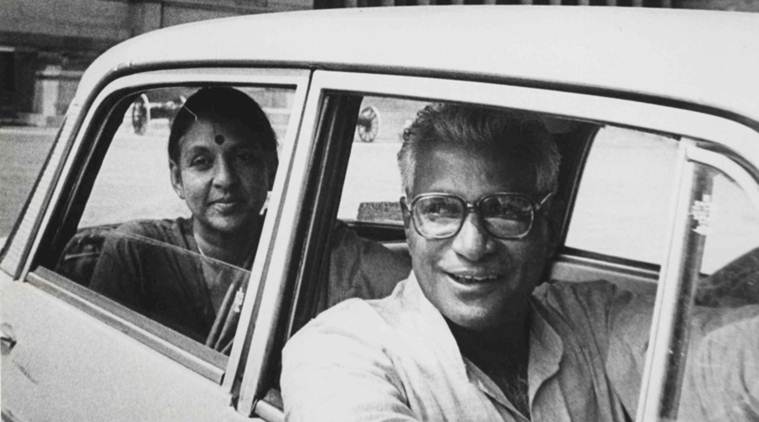
George Fernandes passed away on Tuesday morning. (Express Archive)
I first heard ofGeorge Fernandes, whom we fondly called George Saheb, in the 1960s when I was still a school student in Khagaria, which was the home of many socialist leaders. He had already earned a reputation of being a fiery socialist and trade union leader known for his silver-tongued oratorical skills and lucidity of thought and expression.
After my graduation in law from Patna University, my decision to join the Samyukta Socialist Party (SSP) was inspired by the personality and political philosophy of prominent leaders such as Ram Manohar Lohia, Madhu Limaye, Karpoori Thakur and George Saheb. I was deeply impressed by these leaders’ undiluted commitment to the weaker sections of society, reflected in the SSP slogan — “Sansopa ne bandhi ganth, pichhra paawe sau mein saath” — which basically meant that the weaker sections should get 60 per cent of the opportunities and jobs.
George Saheb was a socialist to the core, unflinching in his commitment to the working class and the marginalised. I remember that in my political struggle to provide homes for the homeless and the poor in 1960s, I gave a call for a “bhoomi mukti andolan” and “jail bharo aandolan”, and also led an agitation of local villagers and the poor to free a thousand acres of land in my assembly constituency from the illegal possession of the local zamindar, who was then the MP from Khagaria. There was a pitched battle between the armed henchmen of the zamindar and the poor villagers who were attacked with bows and arrows and guns. When George Fernandes heard about the incident, he visited Khagaria and announced at a press conference that the local MP would not be given a ticket in the next election. Soon thereafter, I was appointed joint secretary, Bihar, of the party by him.
Those who were fortunate to be associated with George Fernandes were willing to do anything for him. I remember an occasion in the 1970s when after a party meeting in Pune, some party workers and I reached Mumbai only to get caught in a chakka jam of the local taxi union. No taxi driver was willing to help us out until I informed one that we belonged to the same party as George Saheb. There was an immediate change in the taxi driver’s manner. He not only dropped us off at our destination but also refused to accept the fare.
George Fernandes was the symbol of the resistance to the Emergency. A man of indomitable courage, he took on the might ofIndira Gandhiduring the Emergency and galvanised an underground resistance movement against the tyranny. At the height of terrorism in Kashmir he would fearlessly approach terrorists and separatists on behalf of the government, without security escorts. Red tape was anathema to him. Unlike the usual politician, he shunned the trappings of office even as minister, and refused to have security personnel as part of his entourage. A man of the masses, anybody and everybody was free to meet him with their problems. He went to the extent of removing the gates of his ministerial bungalow to allow easy access. He was always contemptuous of humbug and self-importance. As a minister he would travel only by economy class and that too in the rearmost seat.
It is unfortunate that very little is said about his great abilities as a minister and administrator. As railway minister, he was largely instrumental in clearing the Konkan Railway Project, which is the pride of the Indian Railways. One cannot also forget his role as defence minister during the Kargil War.
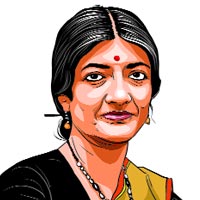
Written by Jayati Ghosh |Updated: January 31, 2019 12:45:21 pm
Jayati Ghosh is professor of economics at Jawaharlal Nehru University, Delhi
Delay in release of official statistics has dire consequences for addressing job crisis
It is counterproductive even for the government because effective policy-making requires proper knowledge of existing conditions and problems.
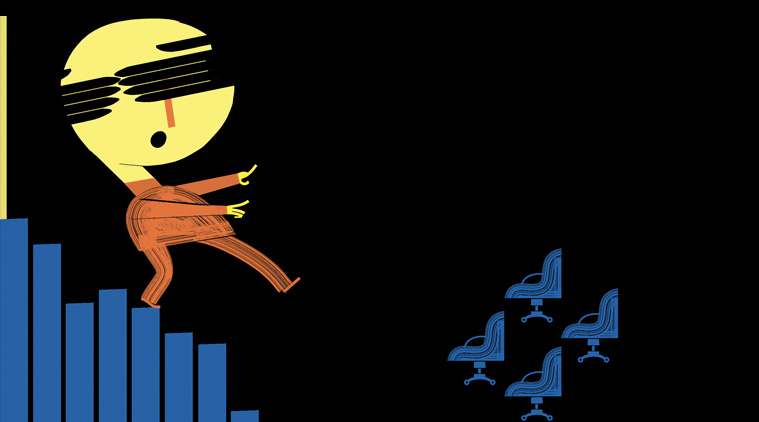
There are huge vacancies in existing posts across central and state governments — it is estimated that there are around 2.4 million vacant posts in the central government and many multiples of that for the state governments combined. (Illustration: CR Sasikumar)
The attacks by theNarendra Modigovernment on many of India’s institutions have been noted, but the destruction of India’s statistical system was not adequately recognised or condemned. That is, not until the latest revelations on how the government refusing to release the NSSO’s employment survey for 2017-18 led to the resignation of the last two remaining independent members of the National Statistical Commission.
This attack on official statistics is obviously important because it denies citizens access to reliable data on what is going on in the economy and assess the government’s performance. This is sad because India had managed to build one of the more impressive statistical systems in the developing world, despite having a large informal economy and many forms of economic activity not captured by conventional measures. And it is counterproductive even for the government because effective policy-making requires proper knowledge of existing conditions and problems.
The list of such transgressions is long, and gets longer daily. The messing up of the new series of GDP data became evident when the much-delayed back series was sought to be manipulated for the purpose of showing the current government in better light than the previous one. Various other data are simply withheld or sought to be massaged before their official release, from the government’s own reports about the status of the Clean Ganga campaign to the actual results of initiatives like the Swachh Bharat Abhiyan or the Ujjwala Yojana or the rural electrification campaign. Fiscal data cannot be trusted because the central government hides its deficits by shifting expenditure off-budget, pretending to sell some PSUs to other PSUs, or simply not paying its dues to programmes for employment or food security. The National Crime Records Bureau has stopped publishing its reports for the last two years. The RBI is refusing to disclose information on banks that are not complying with regulatory guidelines. Even the data on the supposedly transparent MGNREGA website contains a fudge that hides the extent to which the government is not providing work even when it is formally demanded.
The self-created mess is worst for official data on employment. First, the NSSO was made to scrap the quinquennial large labour force survey on the grounds that it would be replaced with periodic labour force surveys that would provide “real-time data”. The report of the 2017-18 survey is ready and was cleared by the National Statistical Commission, but the government is not releasing it. Similarly, the Labour Bureau’s report on the sixth annual employment-unemployment survey, also for 2016-17, has not been publicly released by the government, even though it was supposedly cleared by the minister in-charge.
We can only speculate about whether this is because these surveys show stagnation or decline in employment in the recent past, as suggested by independent surveys. But they still pertain mostly to the period before demonetisation, which is widely accepted to have wreaked havoc on India’s informal economy and livelihoods of the poor. Employment does not appear to have recovered since then. Indeed, the large survey conducted by the Centre for Monitoring the Indian Economy (CMIE) suggests a steep fall in employment in 2018, of as much as 11 million jobs, mostly those of rural women and overwhelmingly among less educated workers. While these data are still preliminary, the overall picture is gloomy.
But even as they prevent the public release of potentially incriminating statistics, government ministers claim that there are no reliable official data on employment in the country. Instead, they — and the prime minister himself — seek to generate hype about employment creation on the basis of completely misleading indicators.
Private consumption, investment demands must rise. Cash transfers, lower income tax slabs, greater liquidity in financial sector will boost growth.
We are not only one of the fastest-growing economy, but also the sixth-largest economy in the world. (Representational Image)
One does not need to go too far back in history to recollect the precarious situation of the Indian economy. When the current government took over in 2014, the declared fiscal deficit was at 4.5 per cent while the actual was estimated to be in the range of 5.5 per cent. The gap between these two figures was because the UPA government incurred off balance-sheet expenses like oil bonds (issued to the tune of Rs 1,42,202 crore and not reflected in government accounts), withheld income tax refunds and rolled over, to the next year, payments which would have ideally come in towards the end of financial year 2013-14. It was creative accounting at its best. Coupled with weakness on the external account, India was part of a group that was informally referred to as the “fragile five” — countries being the weakest links in the global economy.
The Modi government went about managing its financial affairs in a very prudent manner. Falling global oil prices were leveraged to generate better revenue for the government. Measures like demonetisation and the Goods and Services Tax (GST) were launched, establishing audit trail and ownership of money and simplification in indirect tax structure. Macroeconomic parameters like inflation and fiscal deficit have been contained, the current account deficit is manageable and foreign exchange reserves and GDP growth rates are inching higher. In doing so, the government has not sacrificed any essential expenditure. As per the publicly available data, the 2014-15 to 2018-19 period has seen the best combination of GDP growth rate (high) and inflation (low) than any other government in the history of independent India. Success on the macro-economic management front has been one of the biggest achievements of the Modi government and like many other achievements of this government, has been unduly ignored by the mainstream media. We are not only one of the fastest-growing economy, but also the sixth-largest economy in the world. PwC’s annual Global Economy Watch report projects India’s real GDP growth in 2019-20 at 7.6 per cent and accordingly, India is likely to surpass UK in 2019 rankings of world’s largest economies and occupy the fifth position.
The incumbent government is not chasing macro-economic parameters; you look for growth in the economy, hand-hold sectors that need support and do not chase parameters like a certain level of fiscal deficit. At the centre of all initiatives is the ordinary citizen of India and the goal is to ameliorate her condition of living. The target is to achieve a higher level of GDP growth and to make it as wide and participative as possible. In the roadmap for doing so, macroeconomic parameters are self-imposed road signs. These numbers are not sacrosanct. There may be times when we can justifiably ignore these limiting factors. Finance MinisterArun Jaitleyhas said in unequivocal terms that the government would consider ground realities while making its economic policies.
Currently, agriculture and allied sectors are facing some challenges due to lack of sufficient demand for their output. The Micro, Small and Medium Enterprises (MSMEs) sector is another segment that is facing headwinds due to lack of liquidity in the financial system and lack of demand. Increased demand brings in private investment and if there is resource constraint with the government, fiscal expansion is the way out.
The economy will grow only when there is sufficient demand. Government expenditure has increased tremendously in the last five years and sectors like steel and cement have benefited immensely. However, private consumption and investment demands need to increase further. For this there is scope for expansionary fiscal policies, particularly when inflation is low. Fiscal discipline during the last five years has been one of the best and has given the government the elbow room to boost expenditure. The government might consider measures like interest subvention on agricultural loans, direct cash transfer to farmers based on their landholdings, relaxation in income tax slabs for the lower-middle and the middle class and injection of liquidity in the financial sector to boost credit availability. These measures might put some upward pressure on inflation which might not be such a bad thing. Cash transfers to farmers are constrained by the lack of updated land records with the state governments and a way around it must be found. Such a transfer will boost demand for agricultural and non-agricultural products in the rural areas and help the agriculture and MSME sectors.
Governments and economies exist for the people and not the other way round. Accolades from foreign rating agencies and media cannot compensate for the suffering of the people and our government knows this very well.
ver historia personal en: www.cerasale.com.ar [dado de baja por la Cancillería Argentina por temas políticos, propio de la censura que rige en nuestro medio]//
www.revistamedicos.com.ar //
www.quorumtuc.com.ar //
www.sectorsalud.com.ar //
www.maimonides.edu //
weblog.maimonides.edu/farmacia/archives/UM_Informe_Autoevaluacion_FyB.pdf - //
weblog.maimonides.edu/farmacia/archives/0216_Admin_FarmEcon.pdf - //
www.documentalistas.org.ar //
www.cpcesfe2.org.ar //
www.nogracias.eu //
www.estenssorome.com.ar //
www.cuautitlan.unam.mx/descargas/licenciaturas/bqd/plandestudio_bqd_ //
www.latamjpharm.org/trabajos/25/2/LAJOP_25_2_6_1_M4M6Z9746D.pdf //
www.nogracias.eu/v_juventud/informacion/informacionver.asp?cod= //
www.colfarse.com.ar //
www.proz.com/kudoz/english_to_spanish/art_literary/523942-key_factors.html - 65k - // www.llave.connmed.com.ar/portalnoticias_vernoticia.php?codigonoticia=17715 // www.frusculleda.com.ar/homepage/espanol/activities_teaching.htm // http://www.on24.com.ar/nota.aspx?idNot=36331 ||